
How to Lead After the Life You Built Falls Apart
Bobby Williams on loss, forgiveness, restoration, and the decision to begin again.
From a conversation with Bobby Williams
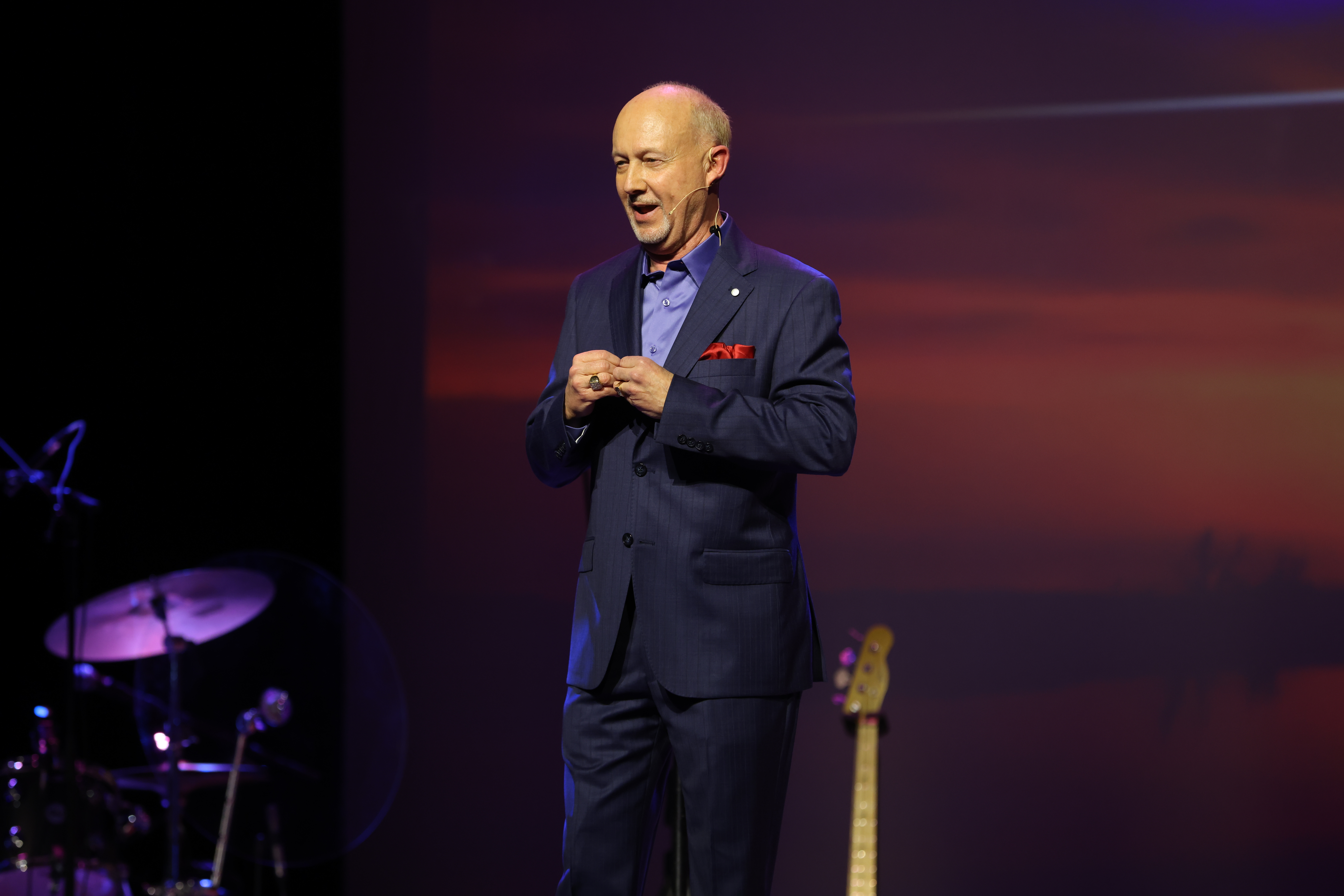
Bobby Williams once led the automotive business that carried his family’s name. His Ignite testimony is not a victory lap around that success. It is an account of what remained after his father’s death, a painful family rupture, the loss of his position, and the slow work of building a future without allowing injury to dictate its terms.
What remains when the title does not
Bobby Williams was in his early thirties when his father died suddenly. Grief immediately became an operating problem. His family controlled two automotive dealerships, hundreds of employees depended on the business, and the responsibilities of leadership did not pause while the family absorbed the loss.
Williams stepped into greater responsibility while other parts of the family system were under strain. He says two of his brothers were struggling with substance use, his mother was grieving, and he could see risks inside the business that he could not fully control. His Christian faith gave him a place to bring the fear, but it did not remove the conflict.
For seven years, Williams says, the dealership remained profitable under his leadership. Then, Williams says, his mother was persuaded to move him aside and put his brother in the role.
Williams and his wife, Donna, returned late at night to collect his trophies. His name was on the building. He had years of results and recognition. He still expected someone to call him back.
No one did.
A title can become the architecture around a leader’s identity. When it disappears, the loss is larger than a job. The leader also loses the setting that told other people who he was.
Williams and Donna sold assets, drew down savings, and adjusted to a smaller life. He returned to school. Donna went back to work. For a time, Williams imagined that moving away might relieve the pain. He later rejected the idea. “It doesn’t work,” he told the Ignite audience. “You just take all your baggage with you.”
His eventual path forward began with a narrower question: What had he actually been good at?
The answer was not simply running a dealership. It was selling, marketing, advertising, promoting, and caring for people. Those capabilities could travel even if the company and title did not.
Williams started A3 Marketing in a one-person office. The work looked smaller than the platform he had lost, and people who recognized him could see that his circumstances had changed. Yet beginning again required choosing usefulness before status.
The more difficult restoration happened inside the family. Williams does not deny the damage caused by the rupture. He also speaks with love about his brother, whom he says later entered recovery and became his best friend. “We weren’t going to lose our family over a dollar bill,” Williams said.
The full member edition explores the difference between forgiveness and denial, how to identify the capabilities that survive a lost role, and the written practice Williams uses to recover a longer view when crisis narrows his attention.
Resilience begins when identity is no longer held hostage by the chapter that ended.
Full member edition
The chapter ended. The leader remained.
Continue with Williams’ account of rebuilding from transferable capabilities, forgiving without denying the damage, and using a written record to recover perspective under pressure.
Full Journal access is included with every active membership, Free Community and up.